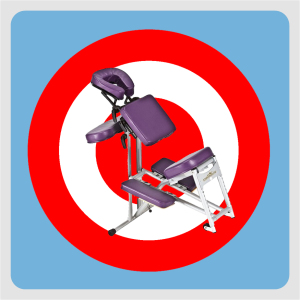
An Overview of Chair Massage Marketing

An Overview of Chair Massage MarketingHere is a recent email from a massage student:

I will be graduating in December and have to write a business plan. I need to decide how chair massage will fit into the plan but don’t have much direction from school. I’m hoping you have some marketing advice or resources available to help my classmates and I know how we would move in the direction of chair massage.


In my reply, I first mentioned that there are some 26 articles about chair massage on this blog along with many others that have more generally to do with massage. Then I also sent her the following concise overview of the why’s and wherefore’s of chair massage marketing.

Options for including chair massage

There are three basic ways to integrate chair massage services into a professional practice:

  1. As a way to market your table practice. This typically means giving away free chair massage at events so that you can introduce people to your touch and your table work. Practitioners have done this successfully any place there is a group of people with time on their hands, e.g. queues on the sidewalk outside of popular restaurants or movies, church bazaars, charity events, health clubs, and waiting rooms of various stripes.This is a good option if your primary interest is in developing a table practice. After the practitioner has as many table customers as she wants, then the free chair massage tends to go by the wayside as the natural marketing momentum emerges from a well run table practice emerges.
  2. As a mix with your table practice. The difference from the first option is that here you are charging for your chair massage services in one or more of the three market segments described below. It still has the advantage of the first option in that you may also convert a certain portion of chair massage customers into table customers.Most practitioners use chair massage this way. In fact, I see a lot of experienced table practitioners adding chair massage to balance out their professional lives and raise their visibility in and connection to the community.
  3. As an exclusive chair massage practice. Some practitioners decide to focus
    exclusively on chair massage. There are many possible reasons including:
  • not wanting to deal with nudity,
  • feeling more comfortable with shorter customer interactions,
  • not wanting to work with oils or lotions,
  • wanting to reach more people who can’t afford a table massage,
  • not wanting to be restricted to four walls,
  • not wanting to be working on the same 20 or so people every week.

Three markets for chair massage

There are also three general market segments where all chair massage is found:

  1. Events. These are situations jobs where you typically see customers once and never again. The largest markets are conventions, conferences, trade shows and corporate health fairs. However, the list of potential one-time events is endless ranging from weddings, reunions, back stage at theater events, athletic events, car racing, RV rallies, equestrian events and on and on. There are many local, as well as large regional and national chair massage businesses that focus exclusively on these markets.
  2. Workplace. This has also been a rich vein to mine for chair massage customers. Unlike events, these tend to be ongoing relationships with companies and their employees. The frequency of visits could be a long as a year apart or, more often, quarterly, bi-monthly, bi-weekly or even weekly.
  3. Retail. Providing chair massage services in a retail setting has been the slowest of the three segments to get off the ground because it requires the most up-front investment. However, the growth in retail chair massage has started to accelerate in the past 5 years, primarily due to the influx of Mainland Chinese immigrants flooding through the Los Angeles basin and scattering to shopping malls all across the country.

Finally, I mentioned that we have assembled an eBook in PDF format that can be ordered from the TouchPro Store here. It assembles the relevant articles from the blog into one convenient place and affordable price. (more…)

Animate Your Support

A good way to add value to your services is by passing along useful information to your customers. YouTube is a great source of short, well-produced videos that are free for the linking.

My colleague, Russ Borner, sent along one such link that I have put up on the part of the TouchPro website that sells our local on-site services for the workplace. It is a two-minute animation that hits all of the major points about the important ergonomic considerations while sitting at a computer keyboard. I particularly like the fact that it uses no words, has just the right amount of humor. Check it out below.

Every website is enhanced by a Resources page with links to videos and articles that your customers will find valuable. Leave links to your favorites in the comments section below.

Change-ability: Mastering the Inevitable

Note: This is the fourth and last of a series of articles called “C”-ing Your Way to Success about  the value of Conviction, Clarity, Consistency and Change-ability in business.

The first three “C”s discussed in this series (Conviction, Clarity, Consistency) are paths, not destinations. While the successful development and execution of a business plan may use these guideposts, it is a mistake to think that the ultimate goal is 100% conviction, clarity or consistency in your operation. That is because other than death, change is the only certainty. In fact, the one often defines the other. When something ceases growing or responding, it is considered dead.

Our job then, is to become experts at understanding the nature of change, the patterns of growth.

While the quality of consistency gives your business stability, nurturing “change-ability” gives your business flexibility. Both are essential. One of the best books you can study on the subject of change is not a business book at all. It is a philosophical treatise disguised as a book of divination. The I Ching, or Book of Changes, is one of the classics of Chinese literature and is at least three thousand years old. The I Ching catalogs sixty-four aspects of change, in the same number of chapters, which are essentially meditations on the patterns of growth in the universe.

Mastering change-ability is important in two ways. It makes you increasingly skillful at predicting what will happen next in your business, and it makes you flexible in your ability to respond to change.

Predictability

When you study the nature of change you become expert at seeing the larger patterns in which your business operates. The most common example of these patterns are business cycles. This is the normal ebb and flow of the activity in your business. These patterns repeat daily, weekly, monthly, yearly, or over even longer periods of time. The more skillful you are at recognizing these patterns the more accurately you will be able to create reliable forecasts in your business plan.

Let’s look at some examples of business cycles.

  • The street fairs you work at tend to be slow in the morning, busy through the afternoon, with a late rush of customers, mostly people who worked in the other booths at the fair. Knowing that you will be about the last one to pack up and leave, you make certain that there is adequate staff and energy, for this final wave of business.
  • You notice that when you provide chair massage in the workplace certain types of clients prefer to have a massage at the beginning of the week, others in the middle, and still others at the end of the week. Because you also have a table massage business on Mondays and Tuesdays, you can more easily target your marketing to the mid and late week groups.
  • Your business increases the first and third week of every month because that is when you client base tends to get paid and can afford a massage. Consequently you plan your marketing and administrative chores for the second and fourth weeks of the month.
  • You anticipate that you will always sell more gift certificates around holidays and special occasions and you know you have to begin your promotion plans at least two months in advance.
  • Perhaps your business focus is on relaxation massage and you anticipate that most of your customers, after a year or so of allowing touch into their lives, will seek out other types of bodywork. To plan for that transition you establish mutual referral relationships with remedial therapists, Rolfers, Feldenkrais practitioners, sports massage bodyworkers, and the like.

The greater your ability to understand the processes of change, the more refined and accurate your business forecasts will be. As you become increasingly expert at recognizing the patterns inherent in your business you will develop an intuitive sense of what steps are needed at any given moment to keep your business healthy. Intuition, despite what some people claim, does not come from the cosmos. It is most often the result of awareness–paying attention to the smallest shifts in the world around us–and experience, lots of experience, over many years. The more we consciously accumulate business experience, the better we become at asking the right questions when faced with a business decision, and the more likely we are to arrive at the right answer.

Flexibility

Change-ability also means the ability to respond to the constantly changing business climate. When external and internal conditions alter, do we resist modifying our plans and actions, or do we smoothly adapt to the new circumstances? Developing flexibility in business is essential to long-term survival. There is no hiding from rapid change in our world. Being conscious of change makes it more predictable and being prepared for change makes it more manageable. Flexibility is the key to preparedness.

Practicing flexibility starts with exercising a flexible mind. Hopefully, the older we get, the more we appreciate the importance of accepting that what we believe is not always the way things are. Prejudice has no role in a flexible mind. When you start saying things like, “I can’t stand Republicans/Democrats/Jews/Mormons,” be careful. Not only are you limiting your options, but the world has a funny way of creating circumstances that may turn exactly those people into your next market.

A flexible mind also sees opportunities where other people see only problems. When circumstances in the business climate change it is always an opportunity for you to learn something new about your market, your service, the nature of business, or yourself. Don’t resist change, embrace it. Without change the world would be a very dull place. With change our businesses remain fresh, vibrant, and exciting places to spend our time.

Make Your Business Persistent with Consistence

Note: This is the third in a series of four articles called “C”-ing Your Way to Success about  the value of Conviction, Clarity, Consistency and Change-ability in business.

In a sense, consistency is the practical result of a commitment to clarity in your business. As you become clear about the complex nature of the services you provide and the market you have targeted, each small component of your business will add to and reflect the overall purpose and function of your business as a whole.

Consistency has something to do with integration. When anyone encounters a small part of your business, they encounter the whole. Each component reflects the larger service vision. Let’s briefly examine some of these elements.

  • Language: How you talk about your business needs to be consistent with the overall intention of your work. I once saw a flier advertising a massage chair that was comfortable and easy for the “patient” to use. Since the rest of the text did not lead me to believe the business was targeting their chair exclusively for use with sick people, the choice of that word was clearly inconsistent.
  • Marketing tools: Your brochures, business cards, letterhead, advertising, and even phone manner should all present the same image and message about the conviction and intention of your work.
  • Professional tools: Do you use the right equipment in the right way for the market and service you have chosen? Do you use paper towels, disposable face cradle covers or linens for you head rest? Each has a place in the appropriate practice.
  • Environment: Does the environment you create for your practice support or detract from your service goal? If customers find parking a hassle to find, they may feel the frustration is not worth the effort. Or perhaps they don’t feel safe walking in your neighborhood and it makes them nervous to think about leaving your office. For the internal environment, make certain that the flowers and air are fresh. Walk into your bodywork environment with beginner’s eyes and see what type of impression it makes. What do they see, hear, or smell? Get a massage on your table to see what the client will be looking at and experiencing for the length of the massage.
  • Personal style: Some people simply, who function well doing chair massage in the workplace are like fish out of water at a convention center. A New Yorker  may have to be toned down his or her personality a bit to be effective in California. What is your personal style? Does it fit well with the overall focus of your business?

Thomas Alva Edison portraitConsistent persistence
According to Thomas Alva Edison, “Genius is one percent inspiration, ninety-nine percent perspiration.” That perspiration is what I call persistence and persistence is just another facet of consistency and is an essential element for business success.

Consistency brings an essential level of stability and predictability to your business operations for yourself and your clients. Without consistency clients wouldn’t know when to call for an appointment or how to budget their time and money to make certain your service is a regular part of their lives. They also wouldn’t feel comfortable referring your service to a friend if they thought you were unreliable. Consistency means creating and sticking close to a business plan. How many clients can you expect to have this month? What will your expenses be? What type of referral network do you need to set up?

If you know you need to send out appointment reminders every week or make a presentation to the local nursing group in order to keep clients coming in, then do it. There are no shortcuts to doing what needs to be done. If you pay strict attention to accomplishing the small details of your marketing strategy, you will find yourself worrying less and less about cash-flow crises. If you take care of your bookkeeping every week, you will have little to fear from the IRS or the phone company.

When you operate a business with consistency it is easier to make changes and know whether or not they are effective. If everything is done differently every day, it is impossible to develop true expertise or intuition because you never know which actions cause which results. In a similar sense, consistency puts the qualities of conviction and clarity into a feedback loop. If a particular marketing approach does not seem to be working, perhaps it is because it is inconsistent with your overall vision or is not being communicated clearly to your market. Consistency provides a check and balance system for your business.

A good recourse policy is the best guarantee of consistency. Having a recourse policy, such as a money-back guarantee, says that you believe in the quality of your service and trust that the client will appreciate it. When you trust a client, particularly a new one, it is easier for them to trust you. If you don’t have a recourse policy there is no way for client feedback to alert you to problems with your business.

The impact of consistency on the success of your business is undeniable. Consistency provides the nuts and bolts, day to day operational stability that keeps you going in the direction intended. It is a type of consciousness that brings together the motivation provided by conviction and the communication provided by clarity into an organized plan of action. Without consistency your business is merely a ship without a rudder, tossed about by the waves and going in no particular direction.

Seeing Your Way Clearly to Success

Note: This is the second in a series of four articles called “C”-ing Your Way to Success about  the value of Conviction, Clarity, Consistency and Change-ability in business.

While having conviction about your work is fundamental to a successful value-based business, a second tool, clarity, is required to effectively communicate your conviction to the rest of the world so they can beat an enthusiastic path to your doorstep. Clarity has a number of important characteristics as it applies to business.

Full disclosure
To be “clear” presumes a commitment to be honest to your customers, to tell the whole truth about your business. This is the business standard that I call full disclosure. When entrepreneurs are not honest about their business it is generally because they either don’t know the whole truth about what they are doing, or they are afraid that if people found out the whole truth they wouldn’t buy the service.

If you don’t know the whole truth about your business—often the case when a person is just starting out—a healthy response is to own up to the fact that you are beginner. All too often new bodyworkers are embarrassed by the fact that they have little experience. The question feared most by bodyworkers beginning their careers is, “So, how long have you been doing massage?”

Rather than fudging an answer, I recommend that new practitioners proudly announce their beginner status. Don’t be ashamed of being a beginner. Celebrate it! Your beginner’s energy, when filled with a fresh conviction about the importance of your work, is unique. Your enthusiasm is infectious and is a marketing strength because it is pure and spontaneous. You only get to be a beginner once so try to hang onto the excitement of that moment for as long as possible.

Understanding your business
If you don’t know what you are doing, neither will your customers. A commitment to clarity is a commitment to an ongoing exploration of your business idea. The greater the clarity you bring to your business idea the easier it is to have conviction about your work and for other people to relate to you.

To say “I do massage” is only the most superficial layer of your business identity.

  • What is your personal intention for your work, i.e. what do you want to get out of your business?
  • What is your professional intention, i.e. what do you want your customers to get out of your services?
  • Are you aware of the deeper assumptions that underlie how you define your business, i.e. your personal philosophy, value system and/or world view?
  • How do you define the market you are trying to reach?
  • How do you define your short-term and long-term goals? The quality of your answers to these questions will reflect the level of maturity that you and your business, have reached.

The search for clarity in business is a process and it never ends. The questions, and the answers, are constantly changing. Your job is to be as clear as you can be, right now, about what you know and don’t know about your business so you can be clear with your customers, employees, suppliers, and supporters.

Translating your business idea
Clarity also means being able to translate your business idea in a language that people can understand. Skilled touch can be talked about in an infinite variety of ways. The words you use must be appropriate to the market you select and the way in which you define your service.

Are you communicating to truck drivers, corporate executives, teenagers, suburban shoppers, seniors, people from a Hispanic culture, or travelers? Each group requires words that are personally meaningful and rationales that make sense.

Telling a construction worker that your massage will improve his muscle tone and make him more beautiful may not have much of an impact. Using the same approach in a beauty salon, however, would be perfectly appropriate.

Openness
One of the most difficult characteristics of clarity to integrate into your business is the concept of openness. When something is clear, like a pane of glass, it is transparent, you can see through it, and nothing is hidden. Secrecy in our business culture—not to mention our governmental institutions—is almost an automatic reflex.

We think that it is normal to hide budgets, salaries, business plans, marketing strategies, and financial statements. But why? Doing business is, in its most basic sense, about having relationships, be it with customers, employees, suppliers, or observers of our business. Few would argue that openness and trust are hallmarks of healthy relationships and yet business relationships are often cloaked in secrecy and adversarial in nature.

Unfortunately, many businesses do, in fact, have something to hide. They do make inferior products. They do treat their customers and employees with disrespect. They do operate with policies that place short-term profits ahead of long-term concern for the environment, community welfare, and even customer’s lives.

Take, for example, salaries. Many corporations restrict information on individual employee compensation and, in the worst cases, make it a firing offence for an employee even to voluntarily reveal how much they get paid. The only reasons for such a policy that I can think of is that the company is embarrassed either by how little or by how much they are paying certain employees? While this secrecy may serve the highest paid executives, it does little to redress historical pay inequalities for women, minorities, and those further down the socioeconomic ladder.

Secrecy in business, like secrecy in a family, is almost always bad. It leads to mistrust, miscommunication, dishonesty, and an eventual breakdown of relationships. There are circumstances when a business is legally or morally bound to confidentiality, such as the shielding of personnel or customer files, but these circumstances are far fewer than corporations would like us to believe.

Openness when your business is dealing with external relationships should follow the same approach. In a business committed to honesty and integrity there is rarely a need to hide what you are doing from the outside world. Realize that every time you adopt a defensive business position you limit the potential for growth and creativity in a relationship.

Concordant competition
Our culture and institutions tend to promote an overly competitive mentality in business. We develop paranoid thoughts that everyone is out to steal our current customers, potential customers, business ideas, business names, whatever. This is not surprising, because the model that traditional business is based on is the military paradigm. When corporations arose in the late 19th and early 20th century the “captains” of industry were, literally, the captains and other officers from the military. The language of business–killing the competition, cutthroat competitors, beating, winning–is the language of war or its civilian surrogate, competitive team sports.

In the military, secrecy has been developed into a fine art and openness is frowned upon. Combined with the requirement for unquestioned obedience and you have the standard operating procedure for keeping the troops in line. In the corporate environment these two elements are too often seen as the best way to keep factory workers and keyboard jockeys at their most productive.

I am a fan of healthy competition which includes a business ethic I call concordance. Concordance means always operating with civility and respect for everyone, including perceived competitors. It rejects the zero-sum mentality that says you have to “lose” so that I can “win.” Focusing on areas of mutual interest is a strategy that builds cooperation and opportunities for synergy in an industry where one plus one equals three.

Mastery
Clarity has another implied characteristic. If you continually seek clarity in what you do, you naturally step on the path of mastery, which is the path toward expertise both in your business and your work. That expertise, in turn, is unique because it comes from walking a path that originates from the inside out.

A master craftsperson never fears competition from other artisans because she recognizes unique character of her contribution. The path of mastery is, by definition, a personal path that can never be duplicated. Nobody can do the job exactly the way that you would do it and clarity means you can explain exactly how your work is different. Not necessarily better than another person’s work, but definitely unique.

The educated customer
Finally, redefines the marketing approach in business from that of selling the customer to educating the customer. In traditional business “selling,” of course, is a euphemism for “manipulation” (masterfully dramatized by the hit TV show Mad Men).

For businesses dedicated to honest, open interactions with customers the only appropriate approach is to educate a customer about the value of your product. Of course, this only works if you, first, have something worthwhile or meaningful to offer and, second, if you understand your product or service well enough to be clear about its essential value. When you educate potential customers you increase their ability to discriminate between the meaningful and worthless and they make better choices about what to buy, and what not to buy.

Education is empowerment while ignorance breeds passivity and dependence, which is great for manipulators but bad for those who want to have healthy, mature relationships. Clarity, full-disclosure as a business standard, creates the best kind of customer—one who chooses your services because they believe that you offer a valuable resource in an honest business.

Summary

A business that operates with a commitment to clarity has a certain simple, ingenuous quality. Because it is transparent to all observers, what you see is what you get. There is no mystery; there are no hidden agendas. Customers intuitively are drawn to the business because of its obvious trustworthiness. They know that there will be no head-trips or rip-offs to worry about. Clarity in business is like a well-cast bell that resonates with a sincerity and authority that draws all within listening distance to its naked, honest ring.